❋
February 14, 2026HISTORY OF THE OLD BANK HOUSE
HISTORY of
The Old Bank House
Avenel · 1873
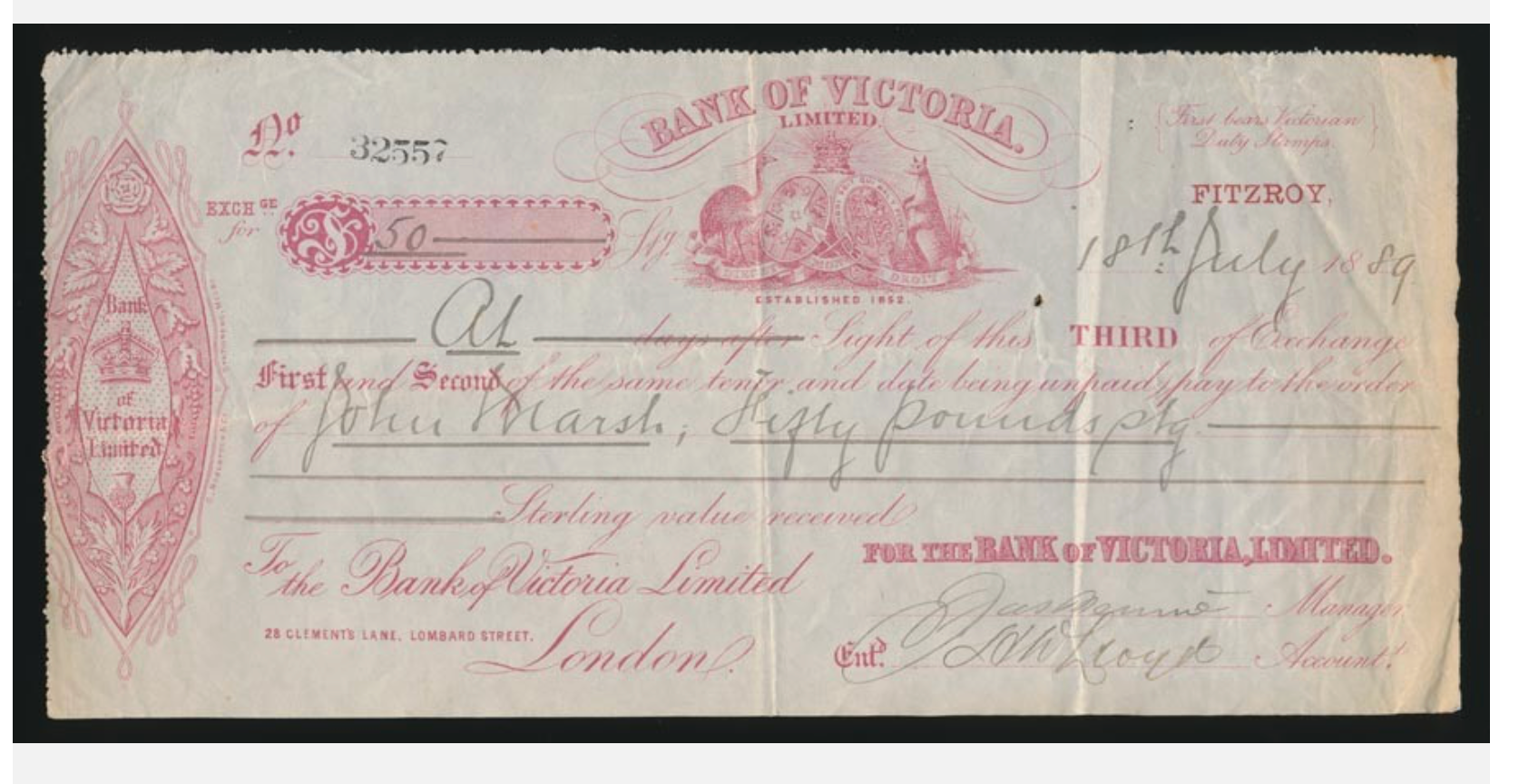
Built in 1873, The Old Bank House began life as Avenel's Bank of Victoria and the residence of its bank manager.
For more than 150 years, people have passed through its doors. Bank managers and customers, families and children, townspeople and travellers have all formed part of its story.
Today, many of the features of that earlier house remain, and a new chapter is beginning.
1873 | A BANK COMES TO AVENEL
The arrival of the railway in 1873 was transforming Avenel. Businesses were opening, the township was growing and two banks were operating almost opposite one another in Bank Street.
The Bank of Victoria, under the management of H. J. Wilkinson, occupied what is now The Old Bank House. Across the road stood the Commercial Bank of Australia, in the building now home to Bank Street Wood Fired Pizza & Garden.
More than 150 years later, both buildings remain part of Bank Street.
1878 | THE KELLY YEARS
Avenel already had an extraordinary connection with Ned Kelly. As a boy, Ned reportedly rescued Richard Shelton from drowning in Hughes Creek and was presented with the now-famous green silk sash that he would later wear beneath his armour at Glenrowan.
THE KELLY GANG EMERGENCY
By December 1878, the Kelly Gang was no longer a distant story unfolding somewhere in north-eastern Victoria.
The danger had reached Avenel.
On 10 December, the Kelly Gang rode into Euroa and robbed the National Bank. In the days that followed, authorities feared that another country bank could be next. Police intelligence identified several possible targets, including Bright, Seymour, Euroa and Avenel.
For a small railway town with two banks almost facing one another across Bank Street, the threat was very real. Warnings were issued. Security across the North-Eastern district was strengthened. Police made arrangements to protect and observe Avenel's banks.
Then Melbourne sent soldiers.
On 15 December 1878, just five days after the Euroa robbery, the first detachment of Garrison Artillery left Melbourne. The men were distributed among railway towns considered vulnerable to another bank raid.
Contemporary newspaper reports two days later placed artillery detachments at Seymour, Avenel, Euroa, Violet Town, Wangaratta and Chiltern.
Avenel had become part of the official response to the Kelly Gang.
Research undertaken into the period also records instructions for an armed constable at Avenel and plain-clothes observation of the bank during business hours. Local historical records indicate that Victoria Artillery Corps personnel were stationed in Avenel and Seymour during the wider emergency.
And here, on Bank Street, stood the banks they were concerned about.
On one side was the Commercial Bank. Across the road stood the Bank of Victoria, the building we now call The Old Bank House.
It is an extraordinary thought.
The peaceful rooms of this house stood here while police watched Avenel's banks, armed men were deployed to the township, and authorities waited to see where the Kelly Gang might strike next.
The gang never robbed Avenel. But for a brief period in the summer of 1878, nobody here could have known that. The quiet rooms of The Old Bank House therefore stood here during one of the most turbulent chapters in colonial Victoria.
THE PEOPLE WHO CALLED IT HOME
The Old Bank House was more than a place of business. It was also a home.
Bank managers and their families lived here, followed by generations of Avenel families who made the old building their own.
Among them were the Donaldsons. John Donaldson acquired the property in the 1880s, beginning another chapter in the house's life. Their story connects the property to Avenel's wider history, with family members buried in the local cemetery and descendants born and raised in the district.
As our research continues, we are gradually rediscovering the names and stories of the people who lived within these walls.
THE HOUSE THAT SURVIVED
Look carefully, and the old bank still reveals itself.
The double entrance doors, the former manager's office, timber-lined walls and ceilings, old fireplaces, wavy glass, the internal transom window, and the surviving safe remind us this was once a working nineteenth-century country bank.
Rather than erase those imperfections and traces of age, our aim is to preserve them.
They are part of what makes this house what it is.
A NEW CHAPTER
In 2026, we became the latest custodians of The Old Bank House.
Our intention is not to turn it into something new, but to carefully preserve what has survived while allowing the property to live again.
The historic residence is once more welcoming guests. The gardens are being revived. The story of the property continues to be researched. In time, shepherd's huts will add another way to stay within the grounds, while The Old Bank House Conversations will create a place for reflection, storytelling and meaningful conversation.
This is not a finished story.
It is one still being uncovered.
AND NOW, YOU
The Old Bank House has welcomed people through its doors since 1873. We're delighted that you're now part of its continuing story.